

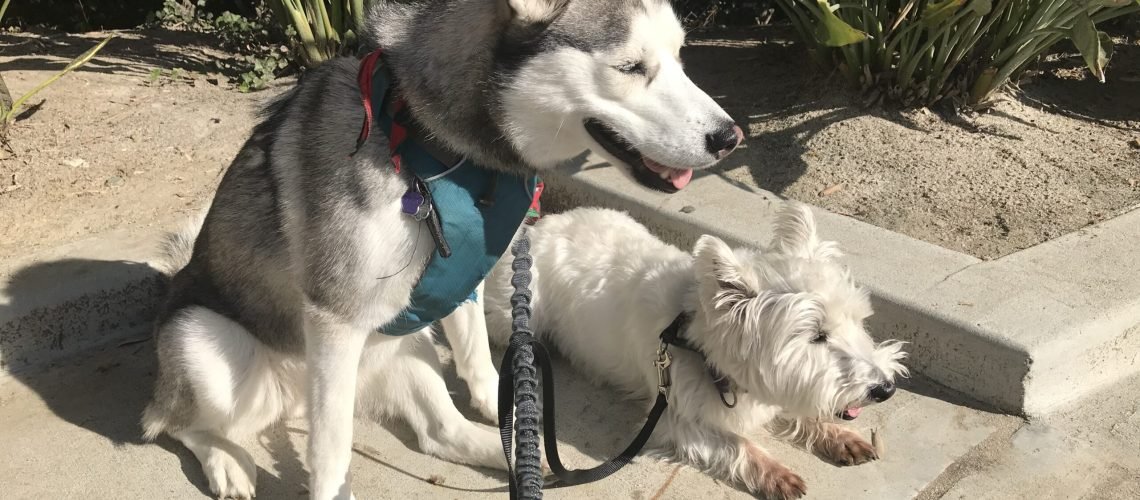
Coyote safety for dogs comes down to supervision and leash control. Keep your dog on a six foot leash, never leave small dogs outside alone, and be extra careful at dawn and dusk. If a coyote approaches, pick up small dogs, stand tall, make loud noise and back away slowly without running.
Why Coyote Safety Matters for South Orange County Dog Owners
If you’ve lived in Laguna Niguel, Ladera Ranch or San Clemente for more than a few months, you’ve probably heard coyotes yipping at night or spotted one trotting across a greenbelt. That’s normal here. According to OC Animal Care, coyotes are found in every part of Orange County, and most urban coyotes come from families that have lived in neighborhoods for generations.
Most coyotes avoid people. Dogs are a different story. A small dog can look like prey, and a large dog can look like a rival, especially near a den.
The good news is that nearly every coyote and dog conflict can be prevented with a few consistent habits. This guide explains how coyotes behave, when risk is highest, how to walk your dog safely, how to make your yard less inviting, and exactly what to do if a coyote gets too close.
What Is a Coyote and How Does It Behave in Neighborhoods?
A coyote (Canis latrans) is a wild member of the dog family native to California. It’s smart, adaptable and comfortable living close to people as long as food, water and cover are available.
Urban coyotes mostly eat rodents, rabbits, fallen fruit and anything else easy to find, including pet food and trash. They play a useful role by keeping rodent populations in check.
Here are a few facts that help explain coyote behavior:
- They don’t need wilderness. Coyotes live comfortably in suburban neighborhoods, golf courses, flood channels and parks.
- They hunt mostly between sunset and sunrise, but they can be seen at any hour.
- They defend territory and family much like domestic dogs do.
- They learn fast. A coyote that finds food near homes loses its natural wariness of people, which is when problems begin.
Are Coyotes Dangerous to Dogs?
Yes, coyotes can be dangerous to dogs, especially small breeds, puppies and senior dogs left outside unattended. Larger dogs are rarely seen as prey but can still be injured in a confrontation.
Risk depends on a few factors:
| Dog Type | Main Risk | Why |
|---|---|---|
| Small dogs (under about 25 lbs) | Predation | Size and movement can trigger hunting behavior |
| Puppies | Predation and injury | Small, curious and slow to respond to cues |
| Senior or mobility limited dogs | Injury | Less able to retreat or avoid a confrontation |
| Medium and large dogs | Territorial conflict | Coyotes may confront or “escort” them away from dens |
| Dogs off leash | All of the above | Distance from the owner removes your protection |
Weight thresholds aren’t official cutoffs. They’re a practical guide. A determined coyote or a pair working together can be a threat to more dogs than owners expect.
When Are Coyotes Most Active in Orange County?
Coyotes are most active at dawn, dusk and overnight, and activity shifts with the seasons. Knowing the calendar helps you adjust walks and yard time.
- Winter (roughly January to March): Breeding season. Coyotes travel more and may act bolder toward dogs they see as rivals.
- Spring (roughly April to June): Pups are born and raised in dens. Parents defend den areas and may follow or “escort” dogs away.
- Summer: Young coyotes start exploring with their parents. Sightings near water sources rise during dry months.
- Fall (roughly September to December): Young coyotes leave their family groups to find territory of their own. Inexperienced juveniles can wander into unfamiliar neighborhoods.
Exact timing varies from year to year, so treat these as general patterns rather than fixed dates.
How to Keep Your Dog Safe From Coyotes on Walks
Walk with a standard six foot leash, stay alert in low light, and avoid brushy edges where coyotes rest. Most encounters on walks end without trouble when the dog is close to its owner.
Practical Walking Rules
- Use a fixed six foot leash. Retractable leashes let small dogs drift 15 or more feet away, which is exactly the gap a coyote looks for. OC Animal Care recommends a leash no longer than six feet.
- Plan walks around light. In fall and winter, sunrise and sunset shift fast. Walking in full daylight lowers risk.
- Carry a flashlight and a noisemaker. A whistle, a small air horn or a shaker can is enough. Light helps you spot eyeshine early.
- Stay in the middle of the path. Greenbelt edges, canyon trails and drainage channels are common coyote resting spots.
- Put the phone away near open space. You can’t react to what you don’t see.
- Keep your dog’s cues sharp. A reliable recall, “leave it” and “watch me” let you redirect your dog before it locks onto a coyote.
Why a Calm, Responsive Dog Is Safer
A dog that lunges, barks or chases can turn a passing coyote into a confrontation. A dog that checks in with you and moves away on cue gives the coyote room to leave. Practicing these cues with positive reinforcement in quiet settings first makes them far more likely to hold up when it counts.
What Should You Do if a Coyote Approaches You and Your Dog?
Pick up a small dog, stand tall, make loud noise and back away slowly while facing the coyote. Never turn your back and run, because running can trigger a chase.
Step by Step Encounter Plan
- Stop and shorten the leash. Bring your dog right next to you.
- Pick up small dogs if you can do it safely.
- Face the coyote and look big. Raise your arms, open your jacket or lift a bag overhead.
- Make noise. Yell, clap, blow a whistle or shake a can of coins.
- Back away slowly toward people, a car or a lit area.
- Let the coyote leave on its own. Don’t follow it or let your dog chase.
- If a coyote makes contact, fight back with noise and anything you have, then call 911 or animal control.
What Is Coyote Hazing?
Hazing means using noise, movement and assertive body language to scare a coyote away so it relearns to fear people. Wildlife agencies encourage it when a coyote lingers or approaches.
Hazing works best when it’s consistent across a neighborhood. Don’t haze a coyote that’s cornered, injured or guarding pups, and never throw objects at it while your dog is loose nearby.
How Do You Make Your Backyard Less Attractive to Coyotes?
Remove food, water and hiding spots, and supervise your dog outside, especially at night. A fence alone isn’t enough, since coyotes can jump and climb surprisingly well.
Backyard Checklist
- Feed pets indoors and bring water bowls in at night
- Store trash in sealed, heavy containers
- Pick up fallen fruit from citrus, avocado and fig trees
- Clean up spilled birdseed, which attracts rodents and then coyotes
- Clear thick brush and enclose the bottoms of decks and sheds
- Remove standing water when possible
- Add motion activated lights near doors and dog areas
- Consider coyote rollers or an angled extension on top of fences for extra protection
Is a Fenced Yard Safe for a Small Dog?
Not on its own. OC Animal Care advises that cats and small dogs shouldn’t be left outside alone, even in a fenced area. Stay with your dog during potty breaks after dark, or use a fully covered enclosure.
Common Coyote Safety Mistakes Dog Owners Make
- Leaving a small dog out “just for a minute” at night. Many losses happen in those few minutes.
- Using a retractable leash at dusk. The extra distance removes your ability to protect your dog.
- Feeding pets or wildlife outdoors. Even feral cat feeding stations draw coyotes.
- Running away during an encounter. Running invites a chase.
- Assuming daytime means safe. Coyotes are mainly nocturnal but are active at all hours.
- Ignoring a bold coyote. One that approaches people repeatedly should be reported.
Who Should You Call About Coyotes in Orange County?
For a coyote that seems to have lost its fear of people, call OC Animal Care at (714) 935 6848. Some cities, such as Laguna Niguel and San Clemente, may handle animal services through their own contracts, so check your city’s website as well.
If a coyote attacks a person, call 911 right away and notify the California Department of Fish and Wildlife. CDFW generally doesn’t trap or relocate coyotes, because removing one simply opens territory for another.
If your dog is bitten or scratched, see a veterinarian promptly, even for small wounds. Coyote bites can cause deep punctures and infection, and your vet may recommend a rabies booster depending on your dog’s vaccine history.
Key Takeaways
- Coyotes live in every part of Orange County, including suburban neighborhoods and parks.
- Small dogs, puppies and senior dogs face the highest risk, especially when left outside alone.
- Coyotes are most active at dawn, dusk and night, and fall brings young coyotes searching for new territory.
- A fixed six foot leash, a flashlight and a noisemaker make walks much safer.
- In an encounter, pick up small dogs, stand tall, make noise and back away without running.
- A fence alone won’t protect a small dog. Supervision and removing attractants matter most.
- Report bold coyotes to OC Animal Care and call 911 if a person is attacked.
- Any bite or scratch needs a veterinarian’s attention.
Frequently Asked Questions
Will a coyote attack a dog on a leash?
It’s uncommon but possible, especially with small dogs or near a den in spring. Leashed dogs are far safer because you can pick them up, scare the coyote away and stay close. A short, fixed leash works better than a retractable one, which can let a small dog drift too far from you.
What size dog is at risk from coyotes?
Small dogs face the greatest risk of predation, but no size is completely safe. Large dogs are more likely to be involved in territorial conflicts, particularly during breeding and pupping season. Puppies and senior dogs of any size are more vulnerable because they’re slower to react and less able to retreat.
Do coyotes come out during the day in Orange County?
Yes. Coyotes mostly hunt between sunset and sunrise, but they can be active at any hour, especially in quiet areas near open space or during cooler weather. A daytime sighting isn’t automatically a sign of a problem. A coyote that approaches people or lingers near homes should be reported.
Can a fence keep coyotes out of my yard?
A fence helps, but coyotes can jump fences around six feet high and dig underneath. Adding coyote rollers or an outward angled top, burying wire mesh along the base and removing food sources makes a big difference. Small dogs should still be supervised outside, especially after dark.
What sound scares coyotes away?
Loud, sudden sounds work best. Yelling, clapping, a whistle, an air horn or a can filled with coins can all scare a coyote off. Pair the noise with big body movements like waving your arms. Consistency matters, because coyotes that are hazed repeatedly learn to avoid people and homes.
Should I let my dog chase a coyote away?
No. A chasing dog can be injured, lured away from you or drawn toward other coyotes nearby. Keep your dog leashed and close, and let your own noise and posture do the work. Calling your dog back on a reliable recall is one of the most useful safety skills you can teach.
What should I do if a coyote bites my dog?
Get your dog away from the coyote, check for wounds and see a veterinarian as soon as possible, even if the injury looks minor. Puncture wounds can hide deep tissue damage and lead to infection. Bring your dog’s vaccine records, since your vet may recommend a rabies booster.
Are coyotes more active in fall?
Fall is when many young coyotes leave their family groups to find territory of their own. These juveniles are inexperienced and may wander into unfamiliar neighborhoods, so sightings can increase. Combined with earlier sunsets, it’s a good season to adjust walk times and supervise yard time closely.
Conclusion
Coyotes are part of everyday life in South Orange County, from the canyons of Laguna Niguel to the greenbelts of Ladera Ranch. They don’t have to be a threat to your dog. A short leash, smart walk times, a tidy yard, steady supervision and a dog that listens when it matters go a long way toward keeping every walk uneventful.
At Pets Friend Forever, safety is part of every walk and training session we do across South Orange County. If you’d like help building a dependable recall and “leave it,” or want a walker who knows how to handle wildlife encounters calmly, we’d be happy to meet you and your dog. Reach out to our team to talk about what your pup needs.