

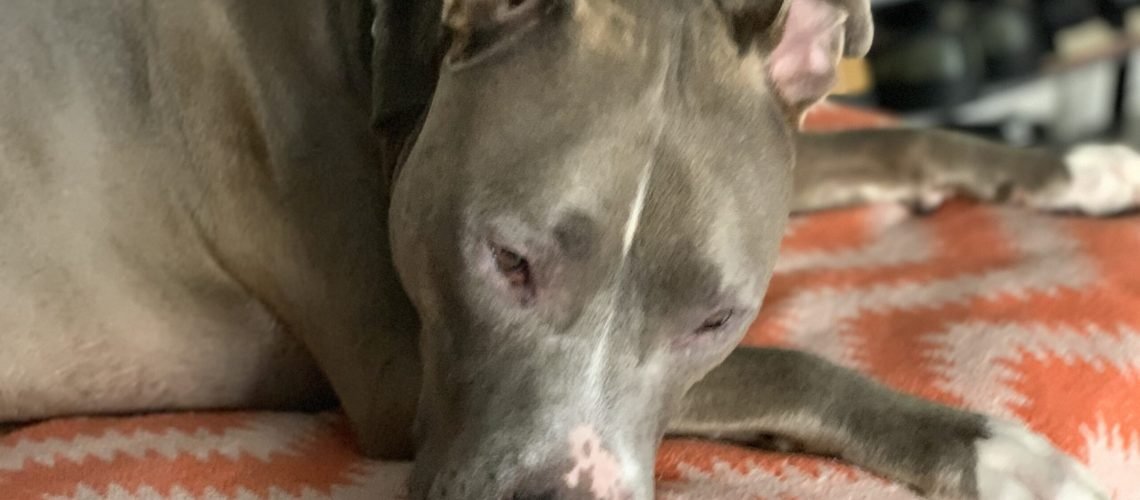
Dogs pull on the leash because pulling works. It moves them toward the smells, dogs, and places they want, so the behavior gets rewarded on nearly every walk. Add a natural resistance reflex and a walking pace far slower than theirs, and pulling becomes the default until you teach a better option.
The Walk You Were Hoping For
You pictured easy evening loops around the neighborhood. What you got is forty five minutes of bracing against a dog who moves like he is towing a sled, a sore shoulder, and a quiet decision to skip the walk on days when you are tired.
If that sounds familiar, the first thing worth saying is that your dog is not being dominant, stubborn, or spiteful. Those explanations have been around for decades and they lead people toward harsh corrections that do not fix the problem. The actual causes are simpler, more mechanical, and far easier to work with once you understand them.
I am Bruce Afkami, founder of Pets Friend Forever in Laguna Niguel. Leash pulling is the single most common complaint I hear from South Orange County dog owners, ahead of barking, jumping, and recall. Here is what is really happening and how to change it.
Why Do Dogs Pull on the Leash?
Four things are usually running at once.
1. Pulling has always worked
This is the big one. Every time your dog leans forward and you follow, the behavior gets paid. The sniff gets reached. The other dog gets greeted. The park gets closer. Over hundreds of walks, that adds up to one of the most heavily reinforced behaviors in your dog’s life. Nothing about it is defiance. It is a habit built on a perfect track record of success.
2. Your pace is painfully slow to them
A medium sized dog moves comfortably at roughly four to five miles per hour. Most humans walk at about three. From your dog’s point of view, every walk is a slow motion crawl through the most interesting environment of their day. The leash is the only thing stopping them from moving at a natural speed.
3. The opposition reflex
Dogs, like many animals, instinctively push back against steady pressure. Pull on a harness and the body leans into it. This is a reflex, not a decision. It explains why tightening the leash to correct pulling often makes the dog pull harder, which is one of the most common mistakes owners make without realizing it.
4. Not enough outlet before the walk
A dog who has been alone in a quiet house for seven hours steps outside carrying a full tank of energy and a backlog of curiosity. The first ten minutes of that walk are not really a walk. They are a release valve. Training a calm heel in that window is like asking someone to whisper the moment they get off a roller coaster.
What Is Loose Leash Walking?
Loose leash walking means your dog moves near you with visible slack in the leash, without a required position. The clip hangs in a soft curve. The dog can sniff, look around, and change sides freely, as long as the leash stays loose.
It is not the same as a formal heel, where the dog holds a precise position at your left side with attention on you. Heel is a competition skill useful for crossing busy streets or passing a reactive dog. Loose leash walking is the everyday goal. Most owners think they want heel and actually want loose leash walking, which is good news because it is far easier to build.
How Do You Stop a Dog From Pulling on the Leash?
Reward the dog for being near you more often than the environment rewards them for being ahead of you. Everything below is a version of that one idea.
Step 1. Decide what a tight leash now means.
From today, a tight leash means forward motion stops. Every single time. No jerking, no scolding. You simply plant your feet and become boring. The moment the leash softens, even slightly, you move again. Your dog learns the rule in a handful of sessions: slack moves us forward, tension does not.
Step 2. Pay the position you want, heavily, at first.
Carry small soft treats your dog actually cares about. Cooked chicken beats kibble here. Every few steps your dog spends near you with a loose leash, mark it with a word like “yes” and deliver the treat at your thigh. You are building a paycheck zone. This feels like a lot of treats. It is supposed to. You are competing with an entire neighborhood of smells.
Step 3. Use direction changes instead of corrections.
When your dog locks onto something ahead and the leash tightens, cheerfully turn and walk the other way. No leash pop. The dog learns that forging ahead leads away from the target, and that watching you keeps the walk moving.
Step 4. Turn sniffing into the reward, not the enemy.
This is the technique most owners have never tried and it changes walks fastest. Pick a target the dog wants, such as a specific bush ten feet ahead. Ask for a few steps of loose leash walking, then release with a cue like “go sniff” and let them get there. Sniffing becomes the paycheck for walking politely, which means the environment starts working for you instead of against you. Behavior scientists call this the Premack principle: a high value activity can reinforce a lower value one.
Step 5. Start where you can win.
Train the skill in your driveway and on a quiet cul de sac before you attempt Salt Creek Trail on a Saturday. Skills do not transfer automatically between environments. A dog who walks beautifully in the kitchen is not being difficult when he pulls at the park. He simply has not learned it there yet.
Which Equipment Actually Helps?
Gear does not train a dog. It buys you control while the training does the work. That distinction matters, because most owners in my experience buy a third harness before they change a single thing about how they walk.
| Equipment | How it works | Best for | Watch out for |
|---|---|---|---|
| Flat collar | No mechanical advantage | Dogs who already walk politely | Pressure on the throat if the dog lunges |
| Back clip harness | Attaches between the shoulders | Small dogs, car restraint, jogging | Directly triggers the opposition reflex, often increases pulling |
| Front clip harness | Leash attaches at the chest and redirects the dog toward you | Most dogs learning loose leash walking | Poor fit can rub behind the elbows, check the armpit area |
| Head halter | Guides the head, so the body follows | Large or powerful dogs whose owners are physically outmatched | Requires slow, careful conditioning over one to two weeks |
| Prong or choke collar | Applies pain or pressure to suppress pulling | Not recommended | See below |
| Electronic collar | Applies a shock or vibration to suppress behavior | Not recommended | See below |
On that last category, I want to be clear about where the recommendation comes from rather than just stating a preference. The American Veterinary Society of Animal Behavior published a position statement on humane dog training in 2021 concluding that reward based methods are supported by the evidence for all canine training, and that methods relying on force, pain, or discomfort should not be used. Their review found no evidence that aversive tools outperform reward based ones in any context, and documented risks to welfare and to the relationship between dog and owner. That is the reasoning behind how we train at Pets Friend Forever, not a marketing position.
How Long Does It Take?
Honest answer: it depends almost entirely on how long the dog has been practicing pulling.
| Dog profile | Typical time to reliable loose leash walking |
|---|---|
| Puppy under 5 months, little pulling history | 2 to 4 weeks of short daily sessions |
| Adult dog, 1 to 2 years of pulling | 6 to 10 weeks with consistent practice |
| Adult dog, years of pulling plus high arousal | 3 months or more, often with behavior work alongside |
| Dog with leash reactivity to dogs or people | Varies widely, needs a tailored plan |
These are realistic ranges from working with dogs across Laguna Niguel, Aliso Viejo, Dana Point, and Mission Viejo, not guarantees. The biggest variable is not breed or age. It is whether the household stays consistent. A dog who is allowed to pull on Tuesday learns that the rule is negotiable.
Mistakes That Keep Your Dog Pulling
- Letting the leash stay tight. A constantly taut leash teaches your dog that tension is the normal state of a walk.
- Only practicing on real walks. Five minutes of focused training in a quiet spot beats an hour of frustrated dragging.
- Switching gear instead of switching approach. New harness, same reinforcement history, same result.
- Fading the treats too fast. Owners often cut rewards in week two, right when the new habit is at its most fragile.
- Inconsistency across the household. If one person enforces the rule and another does not, the dog learns to test.
- Punishing sniffing. Sniffing is how dogs gather information and decompress. Removing it entirely makes walks more frantic, not calmer.
- Skipping physical and mental outlet. A flirt pole session or a snuffle mat before the walk can noticeably lower arousal at the door.
Is It Pulling, or Is It Leash Reactivity?
These get confused constantly, and the difference changes the entire plan.
| Signal | Ordinary pulling | Leash reactivity |
|---|---|---|
| Trigger | Everything ahead is interesting | Specific triggers, usually dogs, people, bikes, or skateboards |
| Body language | Loose, wiggly, happy | Stiff, fixed stare, raised hackles, hard breathing |
| Sound | Quiet, maybe whining | Barking, growling, screaming, lunging |
| Recovery | Moves on quickly | Stays worked up long after the trigger passes |
| What helps | Reinforcement and management | Distance, desensitization, counterconditioning |
If your walks include the right hand column, please do not try to train through it with more treats and more repetitions of the same route. Reactivity involves an emotional response, often fear, and it usually gets worse under pressure. That is a genuine reason to bring in a qualified trainer, and in some cases to loop in your veterinarian, since pain and thyroid issues can contribute to behavior changes.
Where to Practice in Laguna Niguel, in Order
One of the most useful things you can do is build a difficulty ladder and move up only when your dog is comfortable at the current step.
- Your driveway or garage. Nearly zero distraction. This is where the mechanics get learned.
- A quiet residential street mid morning. Low traffic, a few smells, manageable.
- Crown Valley Community Park on a weekday. Open space, some distance from other dogs, room to turn around.
- Laguna Niguel Regional Park. More dogs, more people, more distraction, but wide paths that let you create space.
- Salt Creek Trail or Aliso and Wood Canyons Wilderness Park on a weekend. High distraction, narrow passing points, plenty of bikes and runners. This is the exam, not the classroom.
Check current leash rules and trail access for each location before you go, since city and county regulations change and not every trail allows dogs. In practice, most owners try to start at step five and conclude their dog is untrainable. Start at step one instead.
Key Takeaways
- Dogs pull because pulling reliably gets them what they want, not because they are dominant or stubborn
- The opposition reflex means steady leash pressure encourages more pulling, not less
- A tight leash should stop forward motion every single time, with no jerking or scolding
- Sniffing is the most powerful reward available on a walk, so use it as payment rather than fighting it
- A front clip harness or a properly conditioned head halter gives you control while training does the real work
- AVSAB’s 2021 position statement supports reward based methods and advises against tools that rely on pain or discomfort
- Expect two to four weeks for a young puppy and six to ten weeks or more for a dog with an established pulling habit
- Lunging, barking, and stiff body language point to leash reactivity, which needs a different plan and usually professional help
Frequently Asked Questions
Why does my dog pull on the leash even with a harness?
Most standard harnesses clip at the back, which triggers the opposition reflex and gives your dog better leverage to pull. A front clip harness redirects your dog toward you instead. Equipment alone will not solve it though, since the underlying habit still needs retraining.
Does a no pull harness stop pulling permanently?
No. A front clip harness reduces pulling while it is on by changing the mechanics, but it does not teach your dog what to do instead. Treat it as a management tool that makes training possible, then build the loose leash skill underneath it so the habit holds.
Is it too late to train an adult dog not to pull?
Not at all. Adult dogs learn loose leash walking well, they simply have more reinforcement history to overwrite. Expect six to ten weeks of consistent practice rather than two or three. Older dogs often concentrate better than puppies once the routine is established.
Should I stop letting my dog sniff on walks?
No. Sniffing is essential mental enrichment and helps dogs decompress. Instead of eliminating it, put it on cue. Ask for a short stretch of loose leash walking, then release your dog with a phrase like “go sniff” so that polite walking earns the thing they want most.
Are prong collars effective for pulling?
They often suppress pulling quickly, which is why they remain popular. AVSAB’s 2021 position statement advises against tools that rely on force, pain, or discomfort, citing welfare risks and no evidence of superior results. Reward based methods take longer but do not carry those risks.
How long should a loose leash training session be?
Five to ten minutes is plenty, especially early on. Short focused sessions beat long frustrated walks. Practice once or twice a day in a low distraction spot, then use a front clip harness for your regular walks while the skill is still developing.
My dog only pulls toward other dogs. What does that mean?
That is usually frustration or over excitement rather than general pulling, and sometimes it is early leash reactivity. The fix involves distance and structured exposure rather than more repetitions on the same crowded trail. A trainer can assess which pattern you are dealing with.
Can a dog walker help with leash pulling?
Yes, if the walker uses the same cues and rules you do. Consistency across everyone who handles the leash matters more than any single technique. Our dog walking clients get the same handling their dog gets in training sessions, which keeps progress moving.
The Bottom Line
Leash pulling is one of the most fixable problems in dog training, and it rarely requires anything harsh. Change what pulling earns, pay generously for the position you want, use sniffing as currency, and start somewhere your dog can actually succeed. The walks change faster than most owners expect.
If you would rather have someone watch you and your dog walk and tell you exactly what to adjust, that is what a session is for. Pets Friend Forever offers a free meet and greet across Laguna Niguel, Aliso Viejo, Dana Point, Mission Viejo, Laguna Hills, Ladera Ranch, and San Juan Capistrano. Bring your current gear and your real walking route, and we will build a plan around your dog.
Reach out whenever you are ready. Joey and I would be glad to help.