

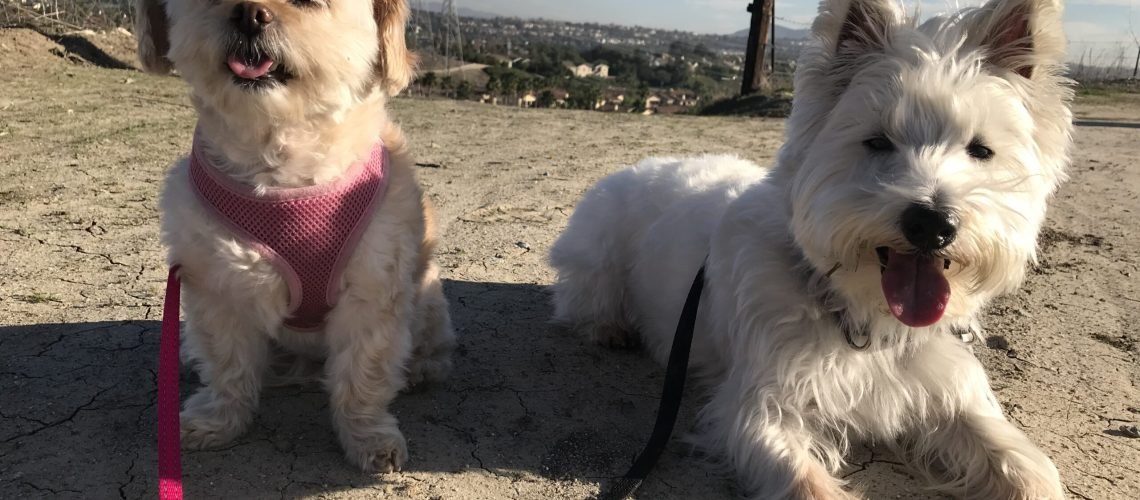
You grab the leash, head outside, and everything seems normal.
Then, without warning, your dog stops.
Four paws stay firmly planted on the ground. You call their name. You encourage them to keep moving. You may even take a few steps forward, but your dog has apparently decided the walk is over.
Sound familiar?
When a dog stops walking and refuses to move, it can be confusing and frustrating. But your dog is usually not trying to be difficult. Stopping during a walk can happen because of fear, discomfort, tiredness, distractions, weather, unfamiliar surroundings, or even something physical that needs attention.
The important part is figuring out what your dog is trying to communicate before deciding how to respond.
Here are nine common reasons dogs suddenly stop during walks and what you can do to help.
Why Does My Dog Suddenly Stop Walking?
There is no single explanation that applies to every dog.
A puppy experiencing the outside world for the first time may freeze because everything feels overwhelming. An energetic adult dog may stop because something interesting caught their attention. A senior dog may slow down because their body simply cannot move as comfortably as it once did.
Veterinary and canine organizations also emphasize that appropriate activity varies according to a dog’s age, breed, physical condition, and health.
That is why the first question should not be, “How do I make my dog walk?”
A better question is, “Why does my dog not want to continue?”
Once you understand the reason, choosing the right response becomes much easier.
1. Your Dog May Be Experiencing Pain or Discomfort
If your dog normally enjoys walks but suddenly stops moving, physical discomfort should be one of the first possibilities you consider.
Dogs cannot tell us that a paw hurts or that a joint feels uncomfortable. Sometimes stopping is their way of saying that continuing does not feel right.
Look at your dog’s paws and body carefully.
Check for anything unusual around the paw pads, nails, legs, or walking equipment. Pay attention to limping, repeated licking, unusual posture, whining, hesitation when standing, or favoring one leg.
If the change appeared suddenly or your dog seems uncomfortable, do not force them to continue.
A veterinary examination is the safest next step when pain, injury, or another medical problem may be involved. Veterinary guidance also recommends ruling out physical causes when a dog unexpectedly refuses to continue walking.
2. Something on the Walk May Be Frightening Your Dog
Sometimes the problem is not the walk itself.
It is what your dog sees, hears, smells, or expects to encounter.
Imagine walking through your neighborhood from your dog’s point of view.
A garbage truck sounds enormous. Construction equipment appears suddenly. A skateboard moves quickly and makes an unfamiliar noise. Another dog is barking behind a fence. Cars rush past only a few feet away.
You may barely notice these things, but your dog might.
A frightened dog may stop, lower their body, move backward, tuck their tail, stare intensely, pant, or try to turn around.
If your dog is scared to walk, pulling them toward the frightening object can make the experience even more stressful.
Instead, create more distance.
Give your dog enough space to observe without feeling trapped. Calmly reward relaxed behavior and allow confidence to develop gradually.
This approach fits with Pets Friend Forever’s broader use of positive reinforcement, which focuses on helping dogs learn through encouraging and rewarding desired behavior rather than relying on fear.
3. Your Dog May Be Too Hot
Weather can completely change how comfortable a walk feels.
This is especially important for dog owners in Orange County and other warm parts of Southern California.
A route that feels comfortable early in the morning can become much harder later in the day. Dogs can also experience heat differently depending on their breed, coat, age, fitness level, and health.
The American Veterinary Medical Association advises avoiding walking, running, and hiking during the hottest parts of warm days and recommends providing breaks and water.
If your dog begins slowing down or stopping on a warm day, do not assume they are being stubborn.
Move somewhere cooler, offer water, allow them to rest, and end the walk if necessary.
It is usually better to enjoy a shorter comfortable walk than turn exercise into an exhausting experience.
4. The Collar, Harness, or Leash May Be Uncomfortable
Your dog cannot tell you that a strap is rubbing behind their front leg.
They cannot explain that a harness feels restrictive or that new equipment makes them uncomfortable.
They can stop walking.
If your dog will not walk on a leash, check the equipment before assuming you have a behavior problem.
Make sure the collar or harness fits comfortably and does not interfere with natural movement. Watch your dog when you put the equipment on.
Do they happily approach you?
Do they move away?
Do they freeze as soon as the harness appears?
Those small reactions can tell you a lot.
For puppies and dogs that are new to walking equipment, introduce the collar, harness, and leash gradually. Let your dog become comfortable with each item before expecting a long outdoor walk.
5. Your Dog May Simply Be Tired
More exercise is not automatically better exercise.
Different dogs have very different physical needs.
Age, breed, fitness, body structure, health, temperature, and activity level can all affect how much walking feels comfortable.
A young athletic dog may still be interested in exploring when another dog of the same age is ready to go home.
Puppies generally benefit from shorter periods of activity rather than strenuous exercise, while older dogs may need gentler movement adapted to their physical abilities.
Watch the dog in front of you instead of following an arbitrary distance target.
If your dog frequently stops near the end of longer walks but happily moves during shorter outings, fatigue may be part of the answer.
Try reducing the distance and see whether their enthusiasm improves.
6. Your Dog Has Found Something More Interesting Than Walking
Not every stop is a problem.
Sometimes your dog simply wants to investigate.
Dogs experience the environment largely through scent. That patch of grass you have walked past hundreds of times may contain an entirely new collection of smells today.
Your dog may stop to sniff a tree, examine where another animal has been, or listen to something you cannot hear.
Giving dogs appropriate opportunities to explore can make walks mentally enriching as well as physically active. Mental stimulation is considered an important part of overall wellbeing and can be supported through exploration, training, toys, and other enrichment activities.
A walk does not need to be a nonstop march from your front door and back.
Allowing reasonable sniffing time can make the outing far more satisfying for your dog.
The key is balance.
Your dog can have opportunities to explore while also learning when it is time to continue moving.
7. Your Puppy Is Still Learning What a Walk Means
A puppy refusing to walk is extremely common.
Think about how strange a first walk must feel.
There are cars, people, dogs, bicycles, smells, doors, sprinklers, birds, unfamiliar surfaces, and a leash attached to their body.
For a young puppy, walking calmly through all of that is not automatic.
It is a learned skill.
Start with short, positive experiences.
Let your puppy explore at a comfortable pace. Reward them for following you, checking in with you, and moving confidently.
Avoid turning every stop into a battle.
A puppy that learns that outdoor walks are safe and enjoyable is much more likely to develop confidence than one that regularly gets dragged toward things they find frightening.
Young dogs are also still physically developing, so exercise should be appropriate for their stage of growth rather than based on how far an adult owner wants to walk.
8. Your Senior Dog May Need a Different Walking Routine
A dog who happily walked the same route for years may eventually start slowing down.
That does not necessarily mean your senior dog no longer enjoys going outside.
Their needs may simply have changed.
Older dogs can still benefit from regular movement and from experiencing interesting sights and smells, but the activity may need to become gentler and shorter.
Pay attention to your dog’s pace.
You may find that two shorter walks are more comfortable than one long outing.
A flatter route may work better than a steep trail.
More sniffing and less distance may make the walk enjoyable again.
If your senior dog stops walking more often than usual, especially if the change is sudden, discuss it with your veterinarian rather than assuming age is the only explanation.
9. Stopping May Have Become Part of Your Dog’s Walking Routine
Dogs are very good at learning patterns.
Sometimes we accidentally teach those patterns without realizing it.
Imagine your dog stops every time they reach a particular driveway.
You immediately pull out a treat and spend several minutes encouraging them.
After enough repetitions, your dog may learn that stopping at that location starts an interesting interaction.
That does not mean treats are bad.
Positive reinforcement is extremely useful when the reward is connected clearly to the behavior you actually want.
Instead of automatically rewarding the stop, encourage movement and reward your dog as they begin walking with you.
The difference may seem small, but timing matters.
Your dog learns which action produces the reward.
What Should You Do When Your Dog Stops During a Walk?
Do not immediately start pulling.
Use the pause as information.
First, look at your dog.
Check their posture, breathing, paws, surroundings, and the weather.
Ask yourself whether anything changed immediately before the stop.
Did a truck arrive?
Did another dog appear?
Did the pavement become hotter?
Has your dog already walked farther than usual?
Are they staring at something?
Once you have ruled out an obvious physical problem, try calmly encouraging forward movement.
You can move a short distance away, use a familiar cue, and reward your dog when they begin moving with you.
If fear appears to be the issue, move away from the trigger rather than toward it.
If tiredness seems more likely, shorten the walk.
If the problem happens repeatedly in the same situation, keep track of where and when it occurs. Patterns often make the real cause much easier to identify.
What You Should Not Do When Your Dog Refuses to Walk
Frustration is understandable, especially when you are trying to get home and your dog suddenly turns into a statue.
But forcing the situation rarely teaches the lesson you want.
Avoid dragging your dog forward without first checking why they stopped.
Avoid yelling or repeatedly increasing pressure.
Avoid assuming every refusal is stubbornness.
Most importantly, do not continue pushing a dog that may be injured, exhausted, overheated, or frightened.
The goal is not simply to make your dog move.
The goal is to help your dog become comfortable enough that moving with you feels like the natural choice.
How to Make Daily Walks Easier for Your Dog
A good walking routine does not need to be complicated.
Start with consistency.
Walk at times when the temperature is comfortable. Choose routes appropriate for your dog’s age and confidence. Give them opportunities to sniff and explore. Practice simple skills such as checking in with you, walking calmly, responding to their name, and continuing forward when asked.
Keep rewards available during training.
Praise good choices while they are happening.
If your dog struggles around a particular distraction, increase the distance instead of repeatedly putting them into a situation they cannot handle.
Most of all, adjust the walk to the individual dog.
That same philosophy is part of how Pets Friend Forever approaches dogs throughout Orange County. Care and training plans are customized around factors such as age, breed, personality, physical condition, and individual needs instead of assuming the same routine will work for every dog.
When Should You Contact a Veterinarian?
Some walking problems belong in a training plan.
Others belong in a veterinary clinic.
Contact your veterinarian if your dog’s refusal to walk begins suddenly, particularly when accompanied by signs of discomfort or changes in normal behavior.
You should also take physical concerns seriously if your dog is limping, repeatedly licking one area, struggling to stand, crying when moving, behaving unusually, or showing signs that exercise has become uncomfortable.
A dog that suddenly changes a familiar behavior may be communicating something important.
Training should never be used as a substitute for investigating a possible medical problem.
When Can Training Help?
If medical problems have been ruled out and your dog mainly stops because of fear, distractions, lack of confidence, leash habits, or uncertainty about what you want, training can help.
The goal is not to overpower your dog.
It is to improve communication.
Your dog needs to understand what you are asking, and they need enough confidence to follow through.
Positive reinforcement can help make the desired behavior clearer by rewarding your dog for walking calmly, responding to cues, checking in with you, and making confident choices.
Pets Friend Forever uses positive reinforcement and customized training approaches for dogs with different personalities, ages, behaviors, and needs throughout Orange County.
Frequently Asked Questions
Why does my dog stop walking in the middle of a walk?
Your dog may stop because they are tired, frightened, distracted, uncomfortable, interested in a smell, too hot, or experiencing physical discomfort. Look at what happened immediately before the stop and watch your dog’s body language before deciding how to respond.
Why does my dog refuse to walk away from home?
Some dogs feel less confident when leaving familiar surroundings. This is especially common with puppies, newly adopted dogs, and dogs that are sensitive to unfamiliar sounds or environments. Start with short positive outings and gradually expand the distance as confidence improves.
Why does my dog stop walking and stare at me?
Your dog may be looking to you for guidance, waiting for something they have learned usually happens next, or feeling uncertain about the environment. Check your surroundings and then calmly encourage the behavior you want.
Should I pull my dog when they refuse to walk?
First determine why your dog has stopped. Pulling a frightened, uncomfortable, injured, overheated, or exhausted dog may make the situation worse. Encourage movement gently only after you are confident that continuing the walk is appropriate.
Why does my puppy keep stopping on walks?
Puppies are still learning how to wear walking equipment, follow a person, process unfamiliar environments, and handle distractions. Short, positive experiences usually make more sense than expecting a young puppy to complete long walks.
Why does my older dog suddenly stop during walks?
Senior dogs may need shorter and gentler exercise as their mobility and physical abilities change. However, a sudden change deserves attention because discomfort or another medical issue could also be involved.
Can fear make a dog completely freeze during a walk?
Yes. Some frightened dogs freeze instead of trying to run away. Look for changes in posture and behavior and try creating more distance from whatever appears to be causing concern. Gradual confidence building is usually more helpful than forcing the dog closer.
Should dogs be allowed to stop and sniff during walks?
Yes, within reasonable limits. Walking provides physical activity, but sniffing and exploring can also provide valuable mental stimulation. A balanced walk can include both purposeful movement and opportunities for your dog to investigate their surroundings.
Final Thoughts
When your dog stops walking and refuses to move, the pause is usually telling you something.
Maybe your dog is tired.
Maybe something hurts.
Maybe the pavement is uncomfortable.
Maybe a sound frightened them.
Or maybe they simply discovered the most fascinating smell in the neighborhood.
Instead of immediately focusing on how to make your dog move, pay attention to why they stopped.
That small change in perspective can make walks safer, calmer, and much more enjoyable for both of you.
And if physical problems have been ruled out but your dog continues struggling with fear, confidence, leash behavior, or distractions, working on those issues through patient and positive training can help turn everyday walks back into something both of you look forward to.